
When is replacement more practical than repair?
Age is useful background, but it does not decide the project by itself. Widespread deterioration, repeated leaks, storm damage, and the limitations of earlier repairs can change the recommendation. Ask which findings make another repair less practical and which roof areas support that conclusion.
What belongs in a roof replacement estimate?
Two totals are comparable only when they describe comparable work. The proposal should identify the roof areas, named materials, removal work, and details around edges and penetrations. It should also make uncertain or excluded work easy to find.
| Part of the proposal | What to clarify |
|---|---|
| Roof area and removal | Which structures, slopes, and existing layers are included, with disposal? |
| Covering and underlayment | Which products, profiles, and roof areas are specified? |
| Decking | What is included, what is unknown, and how is additional repair priced? |
| Flashing and ventilation | Which details are replaced, retained, or excluded? |
| Project arrangements | Who handles permits, property protection, cleanup, and schedule changes? |
| Terms | What are the payment stages and applicable written warranties? |
What changes the cost of a new roof?
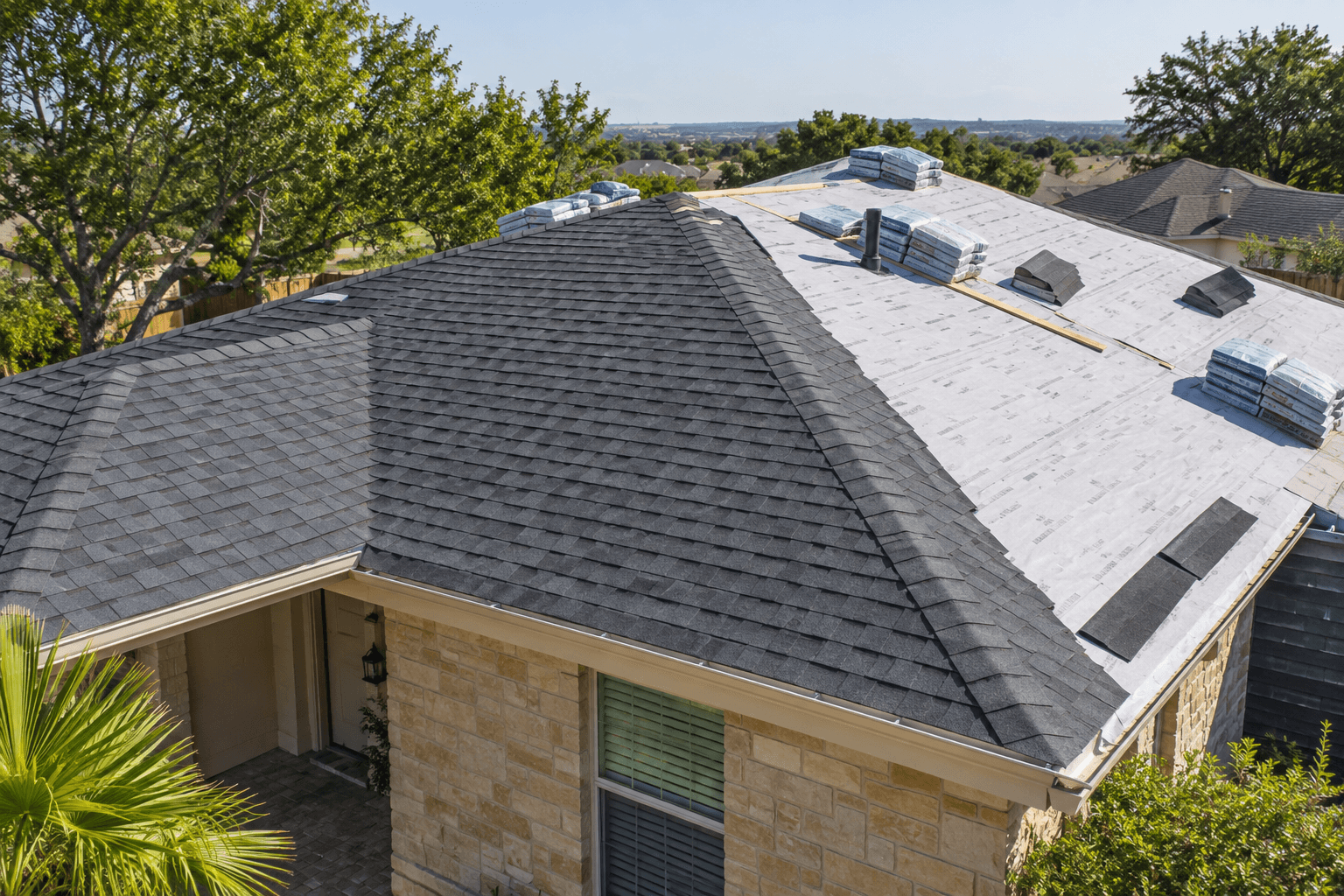
Floor area is not roof area. Shape, slope, height, multiple levels, penetrations, selected materials, and existing layers all affect the work. Conditions beneath the covering may add to the scope. A written estimate should separate the known work from allowances and exclusions.
Agree on hidden-damage decisions before removal
Ask what happens if damaged decking or another concealed problem becomes visible during the job. Establish who will explain the finding, how the additional work will be priced, and how you will approve it. Keep that agreement with the original proposal so a changed total can be traced to a changed scope.
- Identify any included quantity or allowance for underlying repairs.
- Ask for the basis of additional charges and how the affected area is documented.
- Clarify approval before extra work proceeds and how the final invoice records it.
Choose a roof system, then compare its terms
Shingles and standing-seam metal have different appearance, maintenance, and installation considerations. Compare the actual systems offered for your home. Request the manufacturer and workmanship warranty documents that apply to the proposal, including exclusions and any registration requirements; a broad “lifetime” description is not enough to compare coverage.
Plan installation and the final handoff
Before scheduling, discuss permits, driveway access, vehicles, pets, outdoor belongings, and how weather affects the plan. Ask how debris and fasteners are checked at completion, who handles any follow-up concern, and which photos, payment records, permit records, and warranty documents you should retain.